




Choosing the Right Electric Motor for Your Home HVAC: What Most Homeowners Get Wrong
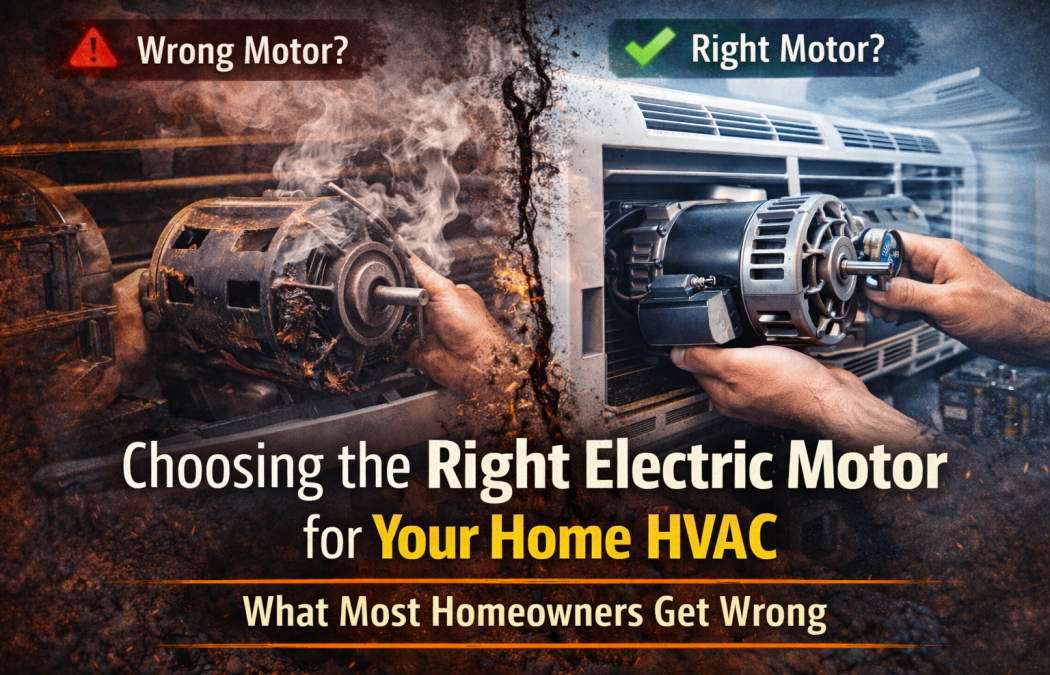
When an HVAC system fails, the motor often gets the blame.
“The motor is bad.”
So it’s replaced.
Same size. Same type. Same power rating.
A few months later, the system struggles again.
The uncomfortable truth?
Most HVAC motor problems are not motor problems. They are selection problems.
Why HVAC Motors Are Widely Misunderstood
To many homeowners, a motor is just a spinning device.
If it turns the fan or compressor, it must be fine.
But HVAC motors live inside a system:
- Airflow resistance changes
- Voltage fluctuates
- Heat builds up
- Loads vary throughout the day
A motor that looks “correct” on paper can quietly suffer in real operation.
The Most Common Mistake: Matching Horsepower Only
This is the classic error.
People match:
- Horsepower (HP)
- Kilowatt (kW)
And stop there.
But two motors with the same power rating can behave very differently depending on:
- Speed
- Torque characteristics
- Efficiency class
- Duty rating
Power alone does not tell the whole story.
Speed Matters More Than Most People Think
HVAC systems depend on airflow.
Airflow depends on fan speed.
A slight mismatch in motor speed can:
- Reduce cooling capacity
- Increase noise
- Cause uneven room temperatures
Many homeowners install motors that run almost the same speed — and wonder why comfort disappears.
Efficiency Class Is Not Marketing Language
High-efficiency motors are not just about saving electricity.
They:
- Run cooler
- Last longer
- Handle voltage fluctuations better
Low-efficiency motors:
- Overheat faster
- Draw higher current
- Fail earlier — especially in hot climates
Efficiency protects the motor as much as your energy bill.
Single-Speed vs Variable-Speed Motors
This choice defines comfort.
Single-Speed Motors
- Simple
- Cheaper
- Limited control
They work, but they operate at extremes:
- Full power or off
Variable-Speed (Inverter) Motors
- Adjust to demand
- Reduce energy use
- Improve comfort
They cost more upfront — and save more over time.
Most homeowners choose based on price, not lifestyle.
Voltage and Power Quality Are Often Ignored
Many homes experience:
- Voltage drops
- Power surges
- Unstable supply
Motors not designed for these conditions:
- Overheat
- Trip
- Burn windings
The motor didn’t fail.
The power environment defeated it.
Heat Is the Silent Motor Killer
HVAC motors already work in warm spaces.
Add:
- Poor ventilation
- Dust buildup
- Oversized loads
And heat shortens motor life dramatically.
A motor that runs hot today will fail tomorrow.
The “Bigger Is Better” Myth
Installing a larger motor seems logical.
In reality:
- Oversized motors cycle inefficiently
- Increase stress on mechanical components
- Waste energy
Bigger motors don’t work less.
They work worse.
Why Home Conditions Matter More Than Catalogs
Manufacturers assume:
- Stable voltage
- Clean environments
- Correct installation
Homes rarely meet all three.
Motor selection must reflect:
- Local climate
- Power reliability
- Usage patterns
Ignoring this is why replacements keep failing.
What Homeowners Should Ask Before Choosing a Motor
Not:
“How powerful is it?”
But:
- Is it designed for my voltage conditions?
- Will it handle variable load?
- How efficiently does it run under normal use?
- Can it survive heat and dust?
The right questions prevent repeat failures.
The Cost of Getting It Wrong
Wrong motor selection leads to:
- Frequent breakdowns
- Higher electricity bills
- Poor comfort
- Constant repairs
The cheapest motor often becomes the most expensive one.
Comfort Is an Engineering Outcome
HVAC comfort is not luck.
It is the result of:
- Proper motor selection
- System understanding
- Respect for real operating conditions
Most homeowners don’t get it wrong because they don’t care.
They get it wrong because no one explains the system.